Coachbuilt hypercar analysis · Published 16 September 2026 · 8 min
Bugatti Brouillard: why one-off coachbuilding has returned
Brouillard is the first Programme Solitaire commission: a unique body and interior over Bugatti's mature 1,600 PS W16 platform. Its importance is the production model behind it—not another acceleration claim.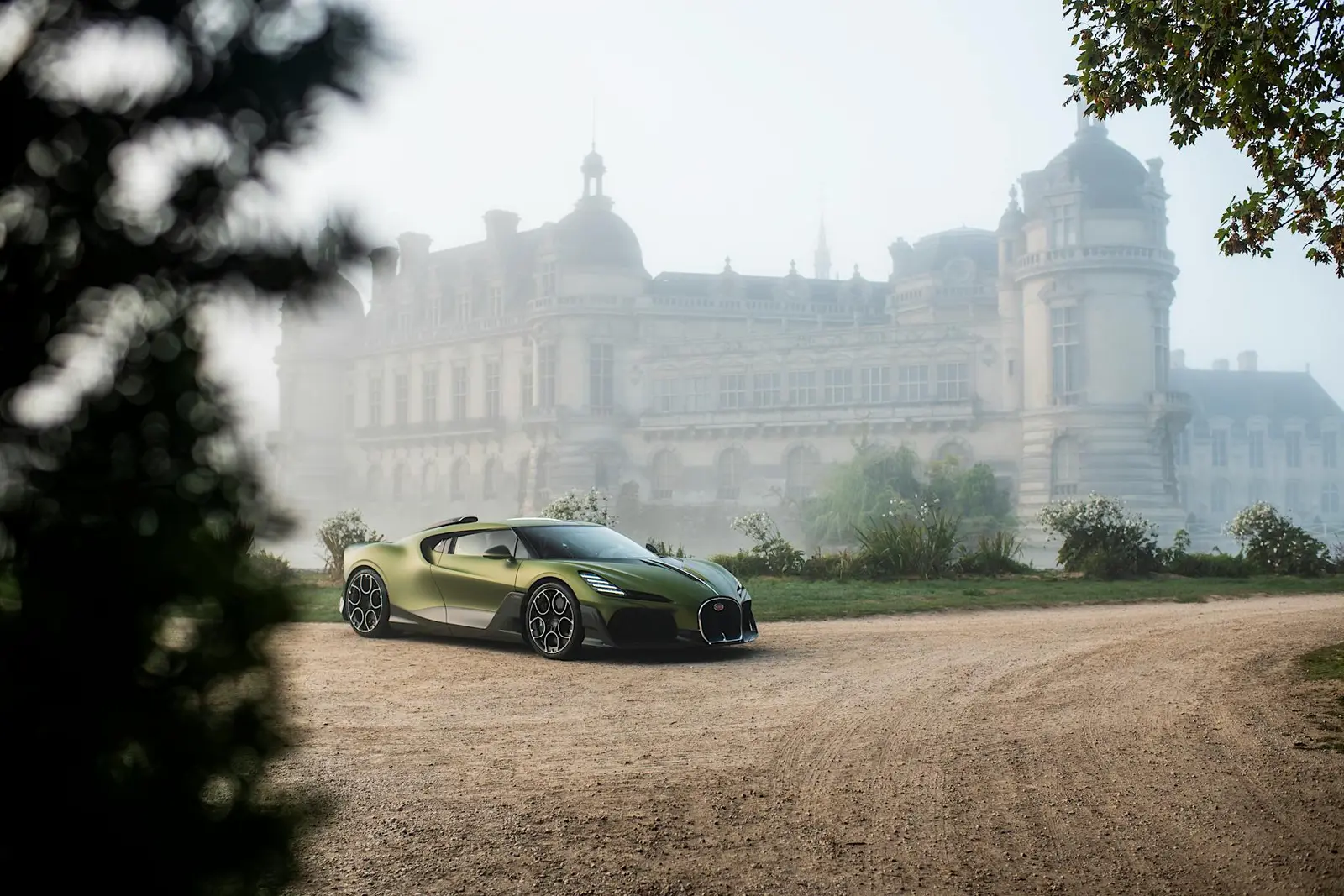
- Production
- One of one
- Engine
- 8.0-litre quad-turbo W16
- Manufacturer output
- 1,600 PS
- Programme limit
- Up to two cars per year
The platform is established; the car is unique
Bugatti says Brouillard uses the latest carbon-fibre and aluminium W16 chassis and the 1,600 PS version of its quad-turbo engine. Programme Solitaire commissions will reuse existing Bugatti powertrains and chassis while receiving unique exterior and interior treatment. [1]
That distinction matters. Brouillard is not a clean-sheet successor to the Chiron or Tourbillon, and Bugatti has not presented a new acceleration record. Its engineering task is to integrate a one-off body, cooling package, aerodynamics and cabin with a proven high-performance platform without compromising the platform's validated behaviour.
Coachbuilding changes more than the paint
The body avoids sharp feature lines in favour of broad, reflective surfaces intended to suggest the musculature of Ettore Bugatti's favourite horse, Brouillard. Darker treatment across the lower third visually reduces mass, while a fixed ducktail wing supplies aerodynamic balance without interrupting the silhouette. [1]
Cooling remains functional: Bugatti describes air intakes and radiator pressure management, a rear diffuser enlarged through the exhaust packaging, and the need to accommodate the thermal demands of a 1,600 PS car. A successful one-off must still control temperature and aerodynamic balance; visual purity cannot erase those constraints.
Programme Solitaire is the larger story
Bugatti positions Solitaire beyond its Sur Mesure personalisation service. The programme is limited to a maximum of two creations per year, allowing unique bodywork and interior development rather than selecting colours and materials for a standard production shape. [1]
The business case resembles historic coachbuilding: proven mechanical foundations reduce the risk and homologation burden of an entirely new car, while design and craft provide scarcity. The test for future projects is differentiation. If silhouettes, packaging and narratives remain distinct, Solitaire can preserve specialist knowledge that series production rarely supports.
The cabin makes the commission personal
Brouillard combines custom-woven Parisian tartan fabric, green-tinted carbon fibre, machined aluminium and a glass roof. The seats were shaped for the owner, horse motifs are embroidered into the trim, and the aluminium gear selector contains a miniature sculpture of the horse that gave the car its name. [1]
These details are not performance upgrades, but that is precisely the point: the buyer is commissioning an object around personal history. The responsible description is a unique coachbuilt Bugatti—not a technically new production model or evidence that handcrafted materials improve speed.
Chantilly completed the story, not the development
On 15 September 2026 Bugatti reported that Brouillard had been handed to its owner at Chantilly Arts & Elegance, entered in the Concept category and received the event's Best of Show award for concept cars, restomods and one-offs. Those are event and manufacturer-reported facts, not independent measures of dynamic ability. [2]
Its significance is therefore cultural and industrial: a delivered one-of-one has moved Programme Solitaire from announcement to reality. The next commissions will show whether Bugatti has revived a durable form of modern coachbuilding or created one exceptional closing chapter for the W16 era.
Primary sources
Specifications and performance figures above are manufacturer claims unless stated otherwise.
[1] Bugatti Newsroom — Programme Solitaire and the first Brouillard ↗[2] Bugatti Newsroom — Brouillard handover at Chantilly, 15 September 2026 ↗