Hypercar analysis · Published 10 September 2026 · 8 min
Bugatti Tourbillon: why its analogue ideas matter as much as 1,800 hp
An 8.3-litre naturally aspirated V16 and three electric motors provide the headline. The deeper Tourbillon story is how Bugatti uses hybrid packaging, structural batteries and mechanical instruments to resist technological ageing.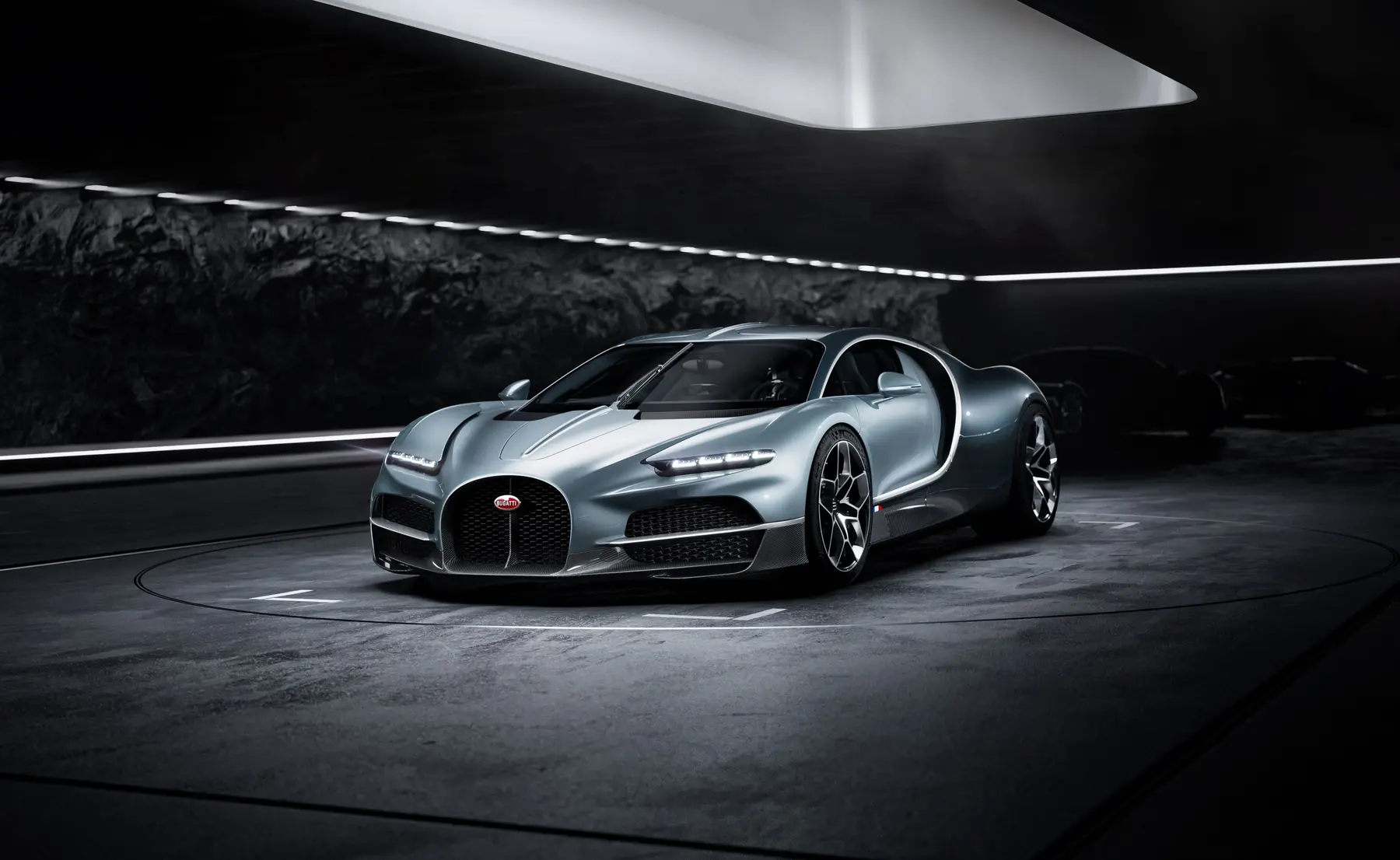
- Combined output
- 1,800 hp
- Engine
- 8.3L V16
- Battery
- 25 kWh
- Production
- 250 cars
The V16 is new, not a continuation of the W16
Bugatti replaces the Chiron's quad-turbo W16 with an 8.3-litre naturally aspirated V16 developed with Cosworth. The engine produces 1,000 hp, weighs a claimed 252 kg and is designed to reach 9,000 rpm. Three electric motors contribute another 800 hp for 1,800 hp combined. [1]
Two motors form the front e-axle and a third acts at the rear. Their role includes immediate response, torque fill, four-wheel drive and torque vectoring. The electric system therefore lets Bugatti pursue the sound and response of a naturally aspirated engine without asking that engine to provide every part of the performance envelope.
A 25 kWh battery is both energy store and structure
The oil-cooled 800-volt battery sits in the central tunnel and behind the occupants. Bugatti integrates it as part of the T800 carbon-composite monocoque and claims more than 60 km of electric range. [1]
Structural integration can save duplicate material and improve stiffness, but it also makes crash repair, isolation and thermal management critical. The range figure is a manufacturer target on a vehicle whose type approval was not complete in the launch material, not an independently verified everyday result.
Aerodynamics replace a permanently visible wing
Bugatti says the Tourbillon can keep its rear wing submerged during top-speed running because the body and a diffuser beginning behind the passenger cell establish the required aerodynamic balance. The wing deploys for added downforce at lower speeds and works as an airbrake during deceleration. [1]
A hidden wing is not evidence of low aerodynamic load; it shows that the underbody, cooling and upper surfaces share the work. Independent measurement must establish lift balance, drag and stability across road and track conditions rather than relying on one maximum-speed configuration.
The analogue cluster is a product-longevity decision
The fixed instrument cluster contains more than 600 parts, uses titanium, sapphire and ruby components, and weighs a claimed 700 grams. The steering-wheel rim rotates around it, while a separate digital screen remains hidden until required. [1]
Bugatti's argument is that visible mechanical instruments may age more gracefully than a permanently dominant display. That does not remove electronics from the car: hybrid control, brake blending, active aerodynamics and safety systems remain software-dependent. The cabin separates visual longevity from the unavoidable digital complexity underneath.
Low mass is the hardest claim to evaluate
Bugatti says the Tourbillon weighs less than the Chiron despite its battery, three motors and additional performance. Aluminium suspension components and uprights save a claimed 45 percent against the Chiron's steel arrangement, while 3D-printed braces and hollow structures remove material where possible. [1]
The manufacturer had not published a final homologated kerb weight in its launch release. Until that figure and independent tests arrive, the important achievement is the packaging strategy—not an unverified assumption that the hybrid system has no weight cost. Customer production is limited to 250 cars, with deliveries planned from 2026. [1]
Primary sources
Specifications and performance figures above are manufacturer claims unless stated otherwise.
[1] Bugatti — official Tourbillon launch, design and engineering ↗[2] Bugatti — official Tourbillon model overview ↗