Start with a small petrol car when purchase budget dominates, a full hybrid when your driving pattern and total budget support it, and a plug-in only after checking charging. There is no like-for-like Pakistan test dataset here that justifies declaring one model the fuel-economy winner.
Choose a category before chasing a number
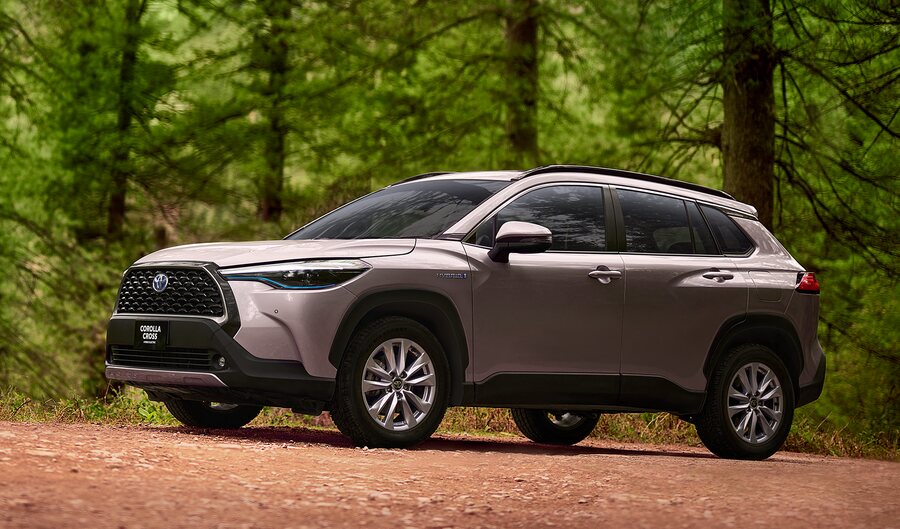
A fuel-efficiency shortlist should fit the seats, luggage and routes you actually need. Suzuki Alto and Swift are useful small-petrol candidates; Corolla Cross HEV and Haval H6 HEV let family-SUV buyers investigate non-plug-in hybrids. Manufacturer pages establish their model and powertrain identities, not their real-world performance on your commute. [1,2,3]
| Need | Starting shortlist | Evidence to obtain |
|---|---|---|
| Small petrol car | Alto; Swift | Same-route tank measurements and purchase quote |
| Family HEV without charging | Corolla Cross HEV; H6 HEV | Traffic-matched consumption and hybrid warranty |
| Plug-in ownership | Compare suitable PHEVs after checking parking | Charging costs plus petrol consumption |
| Lowest total spend | Compare all suitable price bands | Purchase premium, annual mileage and resale assumptions |
Convert every claim to the same unit
Litres per 100 km equals 100 divided by km/l. Thus 20 km/l is 5 l/100 km, while 12.5 km/l is 8 l/100 km. Compare city with city and combined-cycle with the same test cycle. An overseas certification figure and a local owner’s best motorway trip are not a controlled comparison.
For a PHEV, a low petrol figure can reflect electricity consumed from the wall. Record kWh as well as litres, include charging losses when using wall-meter readings, and calculate both costs. Treat an advertised combined range as a distance claim, not a fuel-economy measurement.
What better efficiency is worth in rupees
At an illustrative 15,000 km a year and Rs 300/litre, the fuel-only scenarios below follow distance ÷ efficiency × fuel price. These are not measured results for any named car and Rs 300 is not represented as today’s pump price.
| Assumed efficiency | Annual litres | Annual fuel spending |
|---|---|---|
| 12 km/l | 1,250 | Rs 375,000 |
| 16 km/l | 937.5 | Rs 281,250 |
| 20 km/l | 750 | Rs 225,000 |
Calculate the premium before buying the hybrid
In that example, moving from 12 to 20 km/l saves Rs 150,000 a year. A hypothetical Rs 1m purchase premium takes about 6.7 years to recover from fuel alone. At half the annual mileage it takes about 13.3 years, assuming unchanged prices and efficiency. Neither calculation includes finance, maintenance, insurance, resale differences or the time value of money.
This is why a high claimed average can coexist with a poor financial fit for a low-mileage household. Conversely, frequent urban use can make a worthwhile saving more significant. Use conservative assumptions and check whether the conclusion changes if the consumption advantage is smaller than expected.
Collect evidence you can reproduce
Log at least several comparable full-tank cycles, recording litres, distance, route mix, passenger load, air conditioning and unusual idling. Keep the receipt and avoid selecting only the best result. A maintenance problem or underinflated tyres can distort the comparison, so check the vehicle condition too.
Use that record in the ownership calculator and revisit it after a month. Choose the car that meets your transport needs at a sustainable total cost; do not buy an unsuitable body style simply because an unverified social-media number looks impressive.
Continue your research
Verify before paying
- Same units and test cycle
- Electricity included for plug-ins
- Annual mileage and conservative fuel-price assumption
- Several repeatable measurements, not one best trip
Sources and corrections
The current variant and price record links to the official manufacturer or authorised distributor. CarRates writes original analysis and does not reproduce another publisher’s article.