Hybrid and EV engineering · Published 24 September 2026 · 4 min
Ferrari F80 vs Rimac Nevera R: why battery size cannot rank supercars
A hybrid’s small battery and an electric hypercar’s large pack serve different jobs. Compare the engineering brief before comparing kilowatt-hours.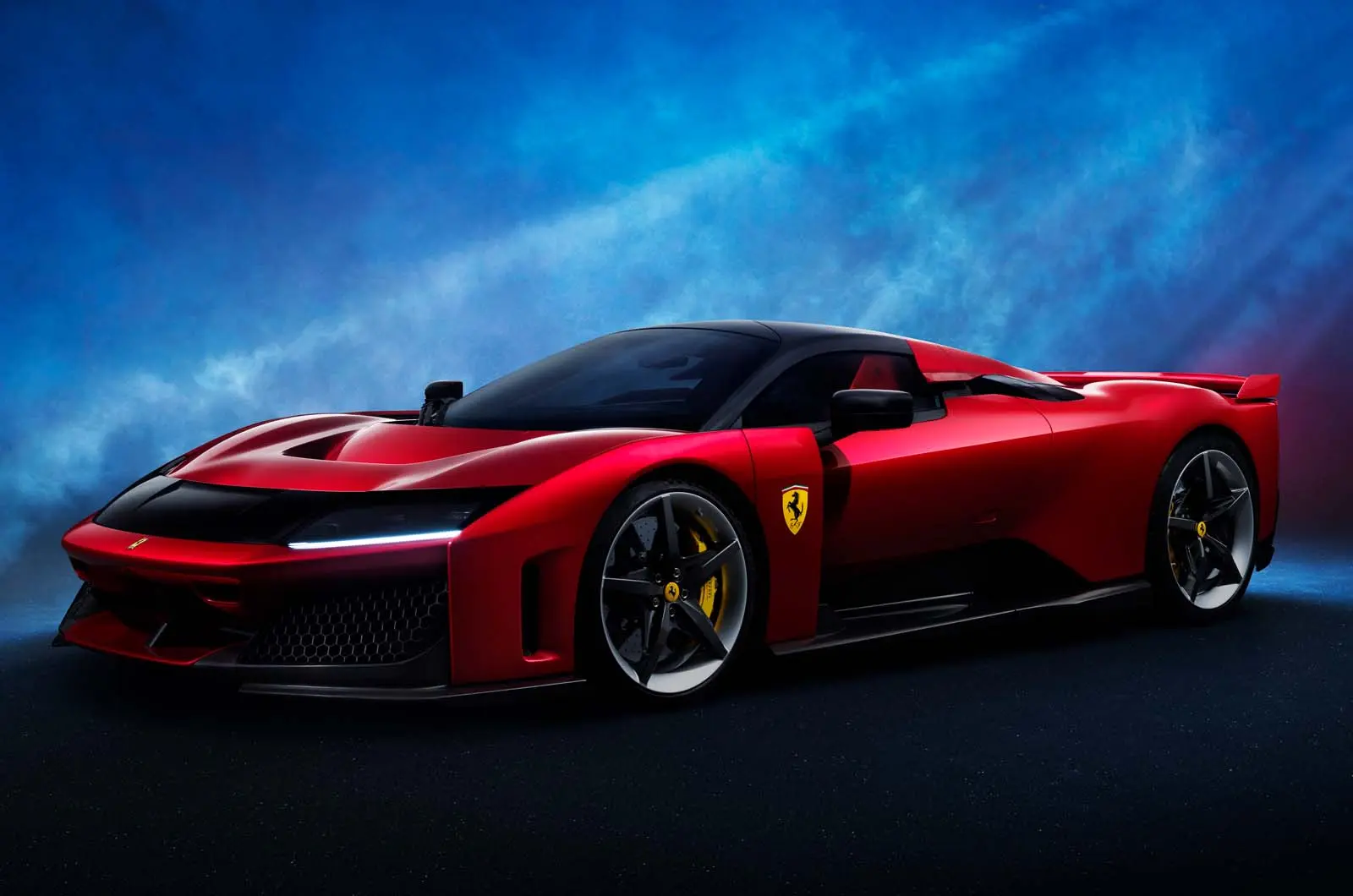
- F80 published battery energy
- 2.28 kWh
- Nevera R published battery capacity
- 108 kWh
- F80 architecture
- Combustion engine plus electric assistance
- Nevera R architecture
- Battery-electric
The numbers describe different jobs
Ferrari’s F80 technical sheet lists battery energy of 2.28 kWh. Rimac’s August 2024 Nevera R announcement describes a 108 kWh pack in its all-electric hypercar. These are manufacturer-published specifications, not measurements made by CarRates. [1,2]
Dividing 108 by 2.28 produces roughly 47.4. That is a ratio of stated capacities only. It does not mean one car travels 47 times farther, is 47 times faster or has 47 times better engineering. The hybrid also carries fuel and an engine; comparing only its battery with an EV’s battery leaves out a major part of the energy system.
Power and energy answer different questions
Kilowatt-hours describe an amount of energy. Kilowatts describe the rate at which energy is transferred. A useful simplified relationship is energy divided by power equals time, but that arithmetic alone does not predict a car’s operation: usable capacity, losses, temperature limits and changing demand all matter.
For a performance hybrid, a compact battery can support bursts of assistance while the combustion engine does much of the sustained work. For a battery-electric car, the pack is the main onboard propulsion-energy store. Both designs must manage power delivery, heat and packaging, but their priorities are not identical.
Ask about repeatability rather than one headline
A single acceleration run cannot establish what happens after repeated hard use. The relevant questions include starting state of charge, battery temperature, ambient conditions, cooling recovery and the control strategy as energy is depleted or recovered.
A fair circuit comparison also needs matched tyres, comparable conditions, transparent timing and a stated vehicle configuration. This article does not establish an F80-versus-Nevera R lap winner. Nor does it turn either maker’s launch claim into a current world-record assertion. Those are separate claims requiring separate evidence.
The lesson applies to ordinary car shopping
A buyer comparing HEV, PHEV and EV models should first decide what the battery is expected to do. Is the aim to assist a petrol engine, cover a daily commute after plugging in, or power every journey? Then examine usable range, charging access and the whole ownership budget.
A bigger pack can bring a benefit, but it can also change price, mass and charging needs. A smaller one can fit a different purpose without being obsolete. Use the advertised capacity to ask better questions, not to declare a winner. That is the useful connection between these extraordinary cars and the everyday purchase decision: match the design to the job.
Primary sources
Specifications and performance figures above are manufacturer claims unless stated otherwise.
[1] Ferrari — F80 technical data sheet ↗[2] Rimac — Nevera R launch specifications, 16 August 2024 ↗