Supercar analysis · Published 2 September 2026 · 8 min
Ferrari F80: why its V6 hybrid system is only half the story
Ferrari's 1,200 cv flagship combines a racing-derived V6, three electric motors and an extreme aerodynamic package. The harder achievement is making those systems work as one road car.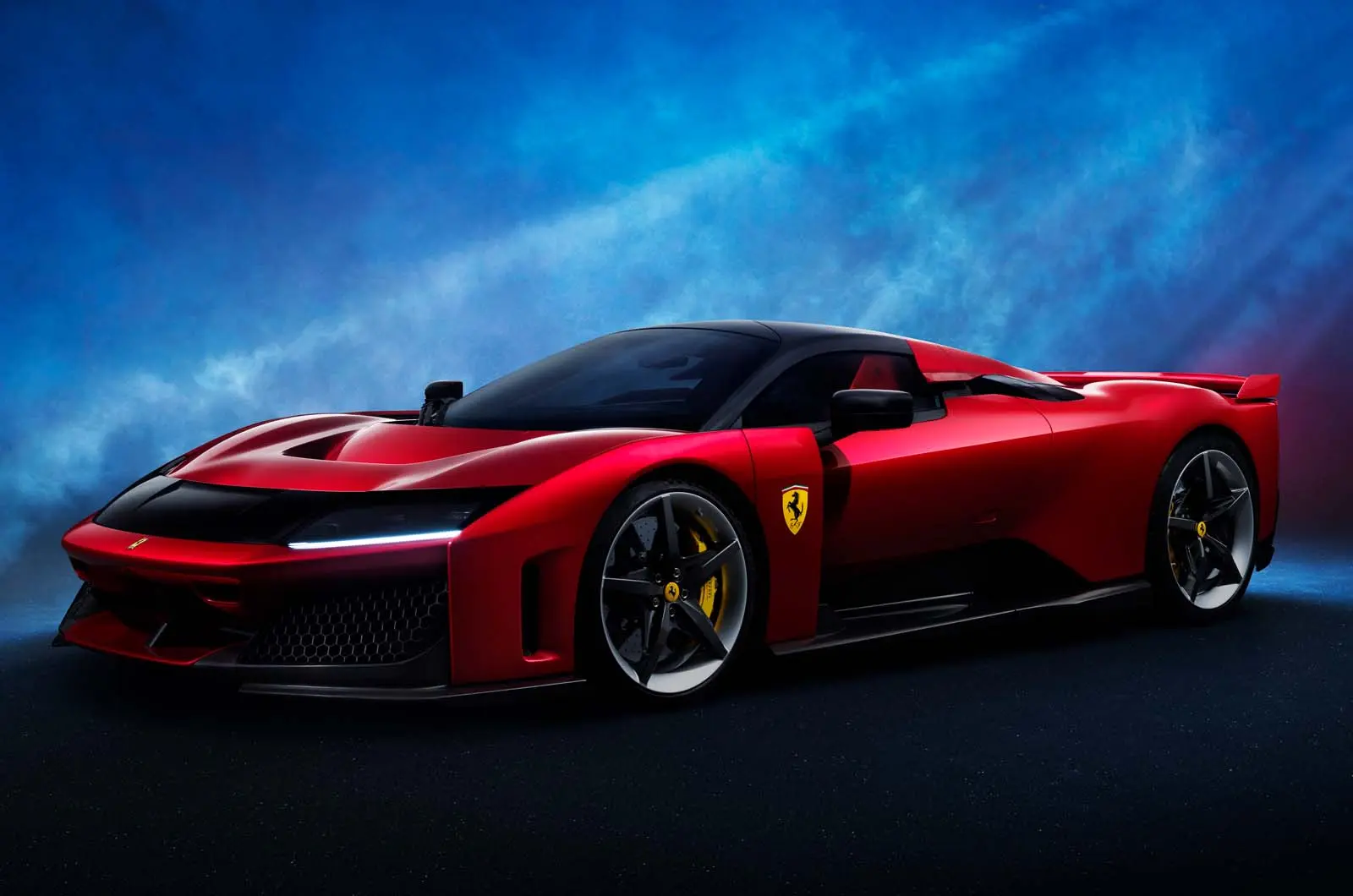
- Combined output
- 1,200 cv
- Engine
- 3.0-litre 120-degree V6
- Production
- 799 cars
- Claimed downforce
- 1,050 kg at 250 km/h
A V6 can still sit at the top of Ferrari's range
Ferrari's F80 uses a three-litre, 120-degree twin-turbo V6 producing 900 cv, supported by electric hardware for a combined 1,200 cv. Ferrari connects the architecture to its 499P endurance-racing programme rather than presenting cylinder count as the only measure of status. [1,2]
The electric system does more than fill torque. Two motors drive the front axle, while a third sits at the rear. Electrically assisted turbochargers use MGU-H technology to control turbo response. The result is an all-wheel-drive hybrid system in which energy recovery, response and traction are inseparable from the combustion engine.
The aerodynamic number needs context
Ferrari reports 1,050 kg of downforce at 250 km/h, created by the body, underfloor, front triplane wing and active rear wing. That number is a manufacturer claim at a defined speed—not a universal measure of cornering ability. [1]
Downforce also adds load to tyres and suspension. Ferrari's active suspension must manage that changing aerodynamic force while preserving body control and road usability. The valuable engineering story is therefore the coordination between airflow, ride height and chassis response, not the size of the rear wing alone.
A one-plus cockpit changes the driver's environment
Ferrari describes the cabin as a 1+ layout: the driver's seat is visually dominant and the passenger seat is set back. This narrows the cabin volume and helps create the shape of a single-seat racing car without removing the second seat. [1,2]
The layout is purposeful but should not be confused with everyday practicality. Visibility, entry, luggage and passenger comfort remain secondary to the driving position. A flagship can be technically road legal while still asking its owner to accept racing-car priorities.
Production numbers settle rarity, not legacy
Ferrari will build 799 F80s. Limited production and flagship status make scarcity certain, but neither proves that the car will be more involving than its predecessors. [2]
Independent road and track testing must establish brake consistency, hybrid transitions, thermal endurance and steering feel. Until then, the responsible conclusion is clear: Ferrari has produced a densely integrated engineering statement, while the quality of the experience cannot be measured from output and acceleration figures alone.
Primary sources
Specifications and performance figures above are manufacturer claims unless stated otherwise.
[1] Ferrari Magazine — the Ferrari F80, a car from the future ↗[2] Ferrari — official F80 technical overview ↗