Concept-car analysis · Published 27 August 2026 · 8 min
BMW M Concept Neue Klasse: the four-motor idea that matters
BMW's electric M concept is visually dramatic, but its important promise sits below the surface: four motors, wheel-specific control and one computer coordinating propulsion, braking and energy recovery.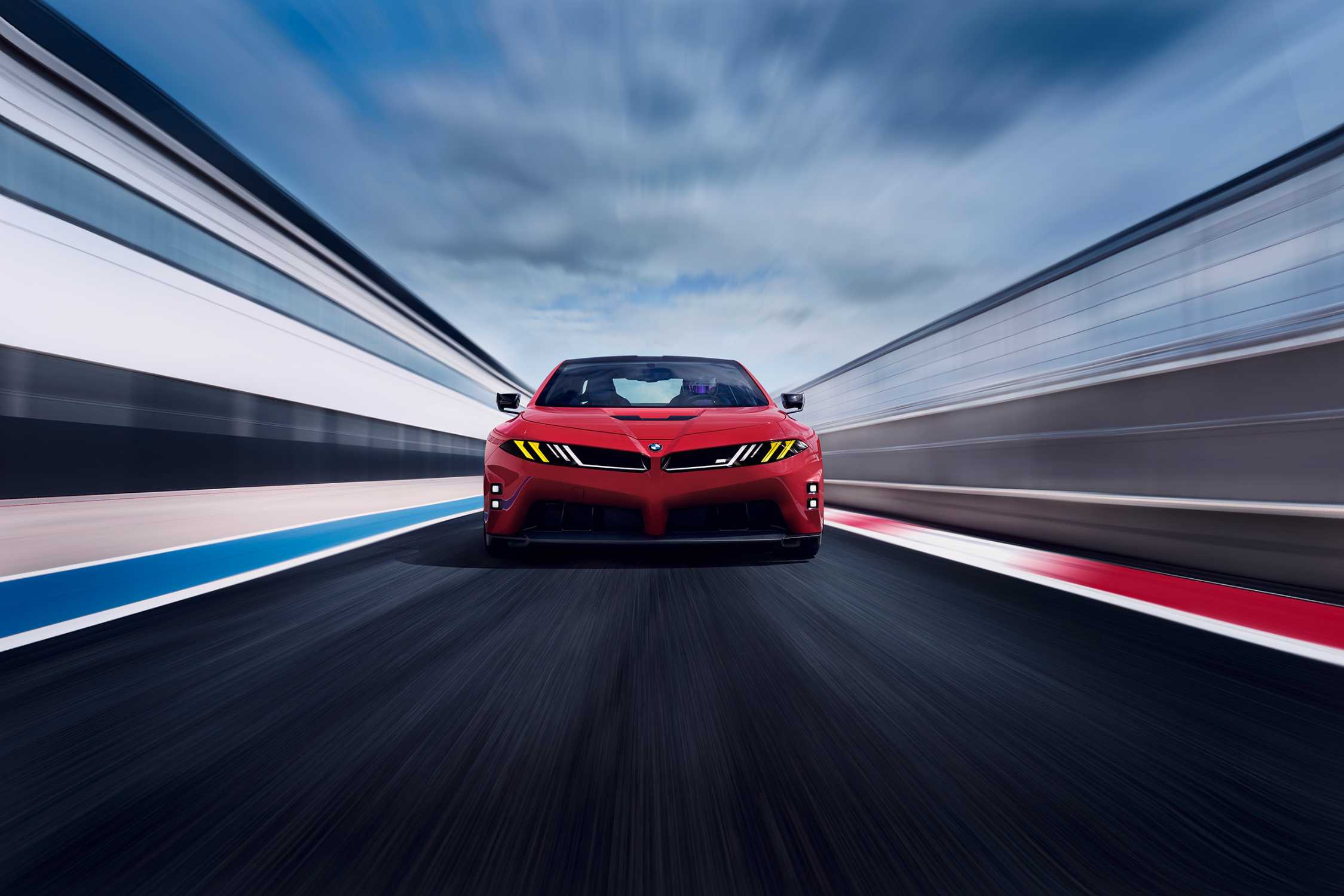
- Drive concept
- Four electric motors
- Electrical architecture
- 800 volt
- Battery
- >100 kWh
- Control system
- Heart of Joy
The headline is control, not a horsepower number
BMW has not attached a production output, acceleration time or sale date to the M Concept Neue Klasse. Instead, it identifies four electric motors governed by M Dynamic Performance Control inside the central Heart of Joy computer. That restraint is useful: the concept is explaining an architecture rather than selling an unverifiable stopwatch figure.
Independent control at each wheel can shape acceleration, cornering balance, stability and regenerative braking far more precisely than a single motor and mechanical differential. The opportunity is not merely maximum traction; it is using the same hardware to make the car rotate, recover energy and respond consistently.
Why four motors are also a difficult choice
Every additional motor, inverter and cooling path adds mass, cost and thermal complexity. Software must decide how four contact patches share torque while the driver still feels a coherent car rather than a computer correcting events after they happen.
BMW says propulsion and braking are integrated at wheel level. If that logic reaches production successfully, transitions between regenerative and friction braking could become both stronger and more natural. The concept does not prove that outcome; it identifies the engineering route BMW has chosen.
The battery is part of the chassis
BMW specifies an 800-volt system and a high-voltage battery exceeding 100 kWh, using an M-specific version of its sixth-generation cylindrical cells. The company says the housing is structurally integrated with the front and rear axles.
A large structural pack can increase stiffness and support high power delivery, but it also makes weight management central to the project. The meaningful production questions will be repeatable track performance, charging curve, cooling, usable range and how the car feels once tyre and brake temperatures rise.
Design details reveal production intent
The bonnet outlet, front splitter, aero mirrors, ducktail spoiler and diffuser are described as functional airflow elements. Yellow light signatures and three-dimensional Track Lights are more likely to become recognisable M design cues than the entire concept body reaching showrooms unchanged.
Natural-fibre material appears in the splitter, bonnet outlet, diffuser, roof graphic and seat structures. Its importance is not simply visual sustainability language: motorsport has been testing natural-fibre composites as an alternative for selected components where impact behaviour, weight and manufacturability can justify them.
What to watch before calling it the future M3
BMW calls the vehicle a preview of its all-electric M direction, but it does not name a production model. Treat online claims about final horsepower, price and launch timing as speculation until BMW publishes them.
The decisive evidence will arrive through a road-going car: mass, sustained output, charging, brake feel and whether individual-wheel control creates involvement rather than only speed. For now, the concept makes one credible statement—BMW M sees software coordination, not raw motor count, as the core of electric performance.
Primary sources
Specifications and performance figures above are manufacturer claims unless stated otherwise.
BMW Group — M Concept Neue Klasse official world premiere ↗BMW Group — official additional imagery ↗