Electric sports-car concept · Published 8 October 2026 · 6 min
Audi Concept C: why the missing performance numbers are the point
Audi has published the Concept C's dimensions, rear-wheel-drive layout and retractable hardtop—but no power, battery or range. It is a production-design preview before it is a performance claim.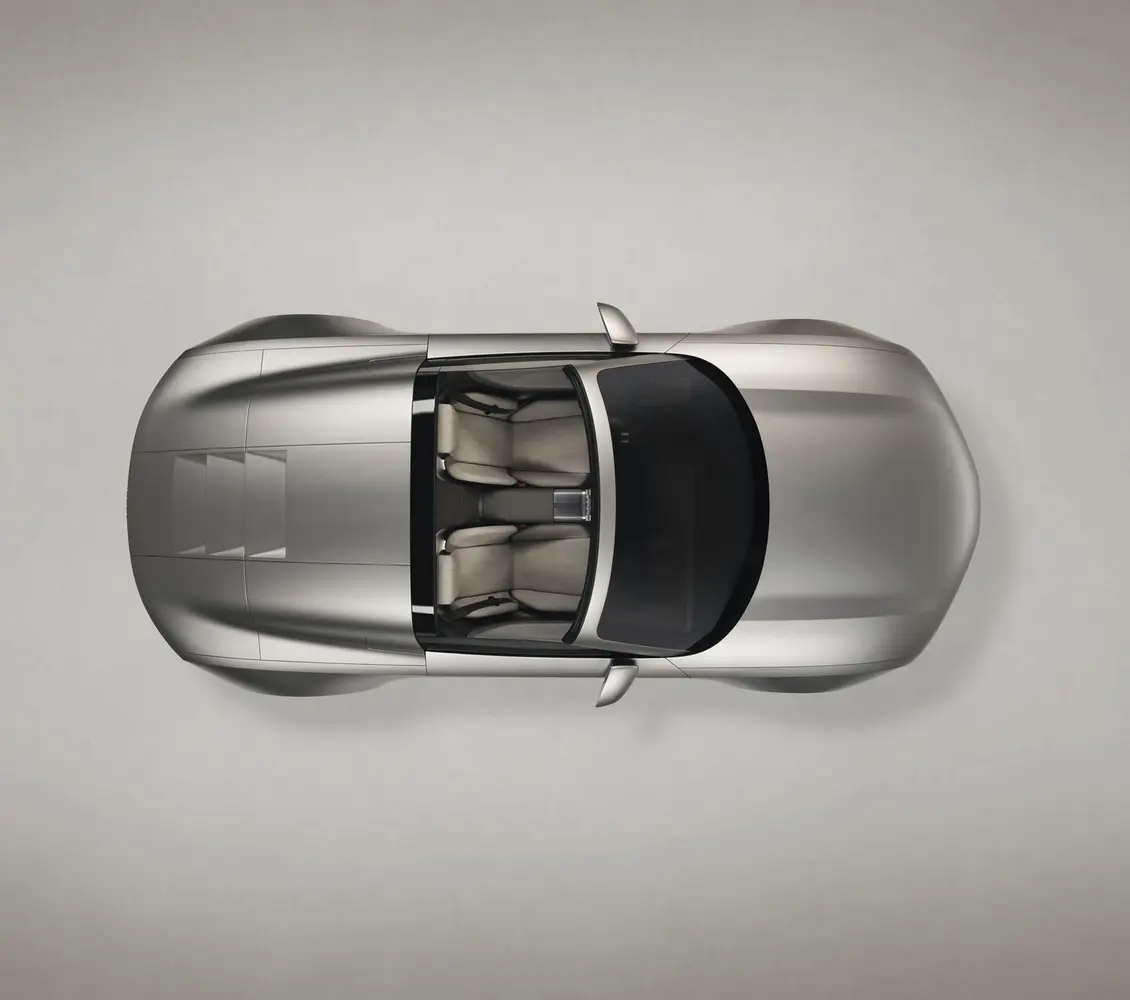
- Layout
- Rear-wheel drive
- Body
- Two-seat electric roadster
- Roof
- Electric retractable hardtop
- Published weight
- 1,690 kg gross
A production preview without a power figure
Audi calls Concept C an all-electric two-seat sports car and says it previews a future production model. The official fact sheet confirms rear-wheel drive, a central-battery layout and 1,690 kg gross weight, but it does not state power, battery capacity, driving range, charging speed or acceleration. [1,2]
That omission sets the responsible boundary. Concept C can be analysed as packaging and design intent, not ranked against production EVs on imagined performance. Audi has not announced a customer price or production date in the cited material.
The proportions come from the battery and two-seat cabin
The concept is 4,520 mm long, 1,970 mm wide and only 1,285 mm high, with a 2,568 mm wheelbase. Audi says the central battery pushes the cabin rearward, helping create a long-front, compact-cabin sports-car silhouette despite the absence of a conventional front engine. [1,2]
A central battery can concentrate mass within the wheelbase, while rear-wheel drive preserves a familiar sports-car relationship between steering and propulsion. Neither fact proves good handling. Final suspension geometry, tyre behaviour, weight distribution and control calibration will determine whether the production interpretation drives as deliberately as it looks.
The hardtop is the engineering feature hiding inside the shape
Audi uses an electrically retractable hardtop with two roof elements—its first such system on a roadster. The aim is to retain a monolithic coupé-like profile when closed and still provide open-top driving. [1]
A folding hardtop introduces mass, seals, drainage, storage volume and structural-stiffness challenges. The concept's clean surfaces do not reveal how much luggage space, rollover structure or weather sealing a production car will preserve. Those questions matter more than assuming the roof is only a visual trick.
Physical controls are part of the future-facing argument
Inside, Concept C combines anodised-aluminium physical controls with a 10.4-inch centre display that folds away. Audi describes the interface as technology that remains available without dominating the cabin and uses the feel and sound of controls as part of the product experience. [1]
This is not a rejection of software—the vehicle remains an EV with digital displays and electronic control systems. It is an argument about hierarchy: frequently used functions should be predictable by touch, while screen information appears when needed. Production usability will depend on which functions retain direct controls and how safely the driver can operate the rest while moving.
The new face will matter beyond one sports car
The vertical front frame references the 1936 Auto Union Type C and the third-generation Audi A6, while four horizontal light elements establish a new signature. Audi explicitly says this identity will influence future models beyond the sports car. [1]
That makes Concept C a brand-system test as much as a vehicle. A vertical frame must accommodate sensors, cooling and pedestrian-protection requirements across different body types without becoming decorative imitation. The strongest evidence will arrive when the idea survives production tolerances and appears coherently on unrelated models.
What remains unknown
Audi identifies the vehicle as a concept that is not available as a production model. It has not provided a homologated kerb weight, battery chemistry, charging curve, range, motor output, tyre specification, boot capacity or price in the cited release and fact sheet. [1,2]
The useful next milestones are a named production programme, engineering specifications and a road-going prototype. Until then, Concept C should be described precisely: a rear-wheel-drive electric sports-car concept and a confirmed preview of future design—not a confirmed TT successor with assumed performance.
Primary sources
Specifications and performance figures above are manufacturer claims unless stated otherwise.
[1] Audi AG — Concept C official media release, 2 September 2025 ↗[2] Audi AG — Concept C official fact sheet ↗