Electric sports-car concept · Published 12 October 2026 · 5 min
Lotus Theory 1: can a 1,000 PS concept make driving feel simpler?
Three seats, a central driver and tactile feedback make Theory 1 more interesting than its acceleration target. The challenge is turning an elaborate concept into an intuitive driving experience.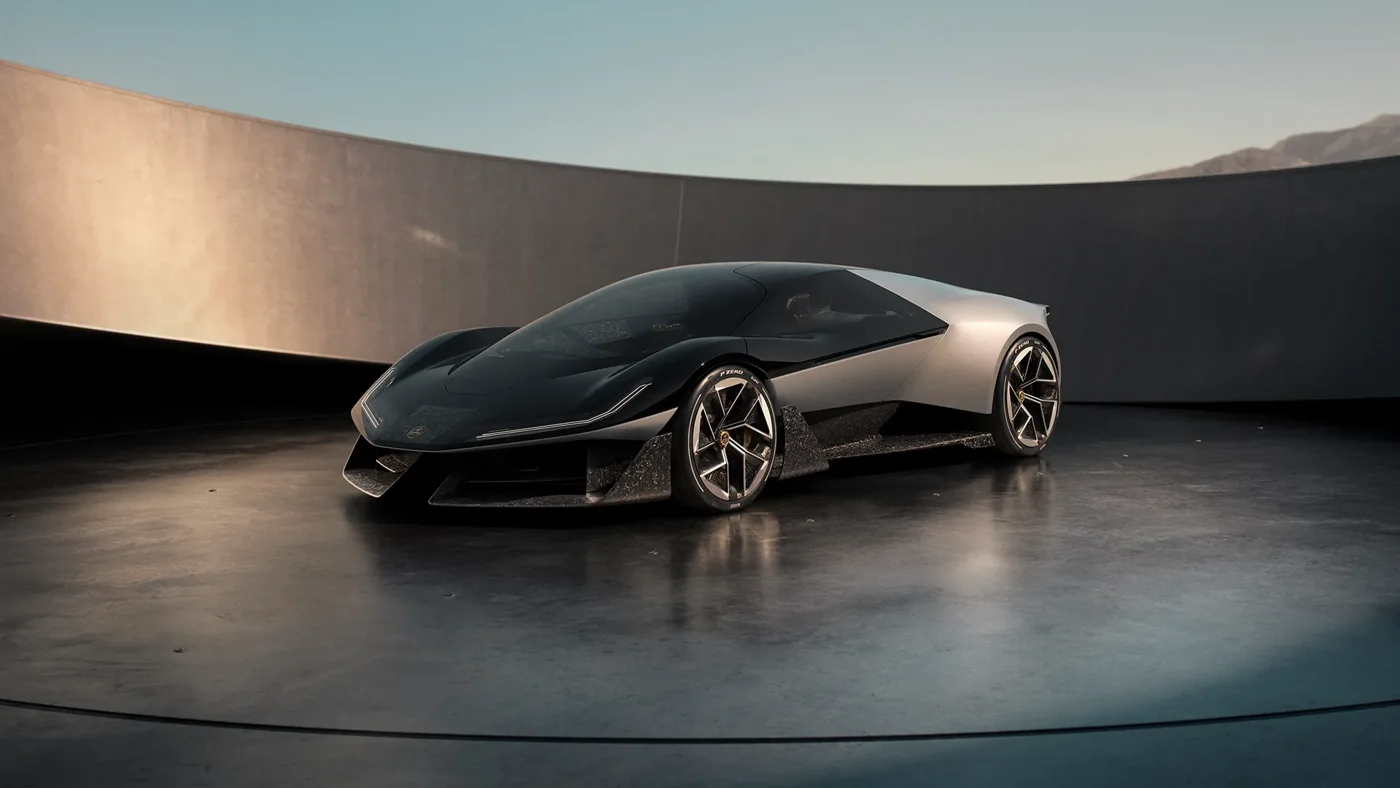
- Status
- Concept; not for sale
- Power target
- 1,000 PS
- Battery target
- 70 kWh
- Layout
- Three seats; central driver
Targets are not road-test results
Lotus unveiled Theory 1 on 17 September 2024. Its target specification includes AWD, a 70 kWh battery, 1,000 PS, under 2.5 seconds to 100 km/h, 320 km/h and weight below 1,600 kg. The company also publishes a 402 km WLTP range target. These are concept targets, not independently verified production-car results. [1]
That distinction prevents a misleading comparison with a homologated road car. Peak power does not tell us repeatable performance after several hard laps, and a range target does not tell us motorway consumption. Those questions require an actual production specification and controlled testing.
A central seat changes more than the photograph
Theory 1 places the driver centrally, with two passengers behind and to either side. Lotus describes a reverse-opening door arrangement and adjustable steering wheel and pedals around the driver. [1,2]
A centre position can give a symmetrical view of the front corners, but it also changes everyday access. The useful production test would include entry in narrow parking spaces, restraint fit, visibility in traffic and how passengers leave the car. A dramatic opening mechanism has to remain understandable when someone unfamiliar with it needs to get out quickly.
Can touch reduce the need to look away?
The LOTUSWEAR concept uses inflatable elements in seats and the steering wheel to provide support and tactile prompts. Lotus developed the robotic textile with MotorSkins; its examples include directional feedback through the wheel. [1,2]
The engineering opportunity is selective communication. A clear, occasional cue may help a driver without adding another screen. Too many cues could create a new kind of distraction. The deciding evidence would be recognition speed, error rate, comfort and whether drivers can distinguish a navigation prompt from a safety warning. More feedback is not automatically better feedback.
Making the battery and motor do structural work
Lotus describes using the motor and battery assembly as a stressed member, carrying suspension loads without a separate subframe. The rear wing is connected to the motor and suspension assembly. [1]
Combining functions can remove parts and shorten load paths, but it also ties mechanical and electrical packaging more closely together. A production interpretation would need to demonstrate fatigue resistance, crash isolation, service access and repair economics. Weight reduction has to survive those requirements; a concept drawing alone cannot prove it.
Material simplicity needs a lifecycle test
The company’s Challenge of 10 aims to use ten principal visible-surface materials, including recycled and lightweight choices. It presents this as a route toward simpler material use. [2]
Reducing material variety may help separation and recycling, yet the joining method is just as important. Bonded composites, mixed coatings and inaccessible fasteners can complicate recovery even when the number of materials is small. A credible environmental comparison would need production quantities, durability, repair options and end-of-life processes, rather than counting materials alone.
What would make the idea worth carrying into a road car?
Lotus explicitly says Theory 1 is not for sale and serves its design and technology research. The release does not establish a customer price or a production launch commitment for this concept. [1]
The strongest transferable ideas are a clear driving position, restrained information delivery and components that fulfil more than one structural role. Success would mean that an unfamiliar driver understands the car quickly and an owner can maintain it sensibly. Until that evidence exists, Theory 1 remains a useful set of engineering questions—rather than a promised 1,000 PS purchase.
Primary sources
Specifications and performance figures above are manufacturer claims unless stated otherwise.
[1] Lotus — Theory 1 launch release and downloadable technical document, 17 September 2024 ↗[2] Lotus — Theory 1 design and technology overview ↗