Electric racing concept · Published 16 October 2026 · 5 min
Porsche Mission R: why sustained power matters more than the headline
Porsche’s 2021 electric racing study separates qualifying output from continuous race power. That distinction explains the car better than a single horsepower number.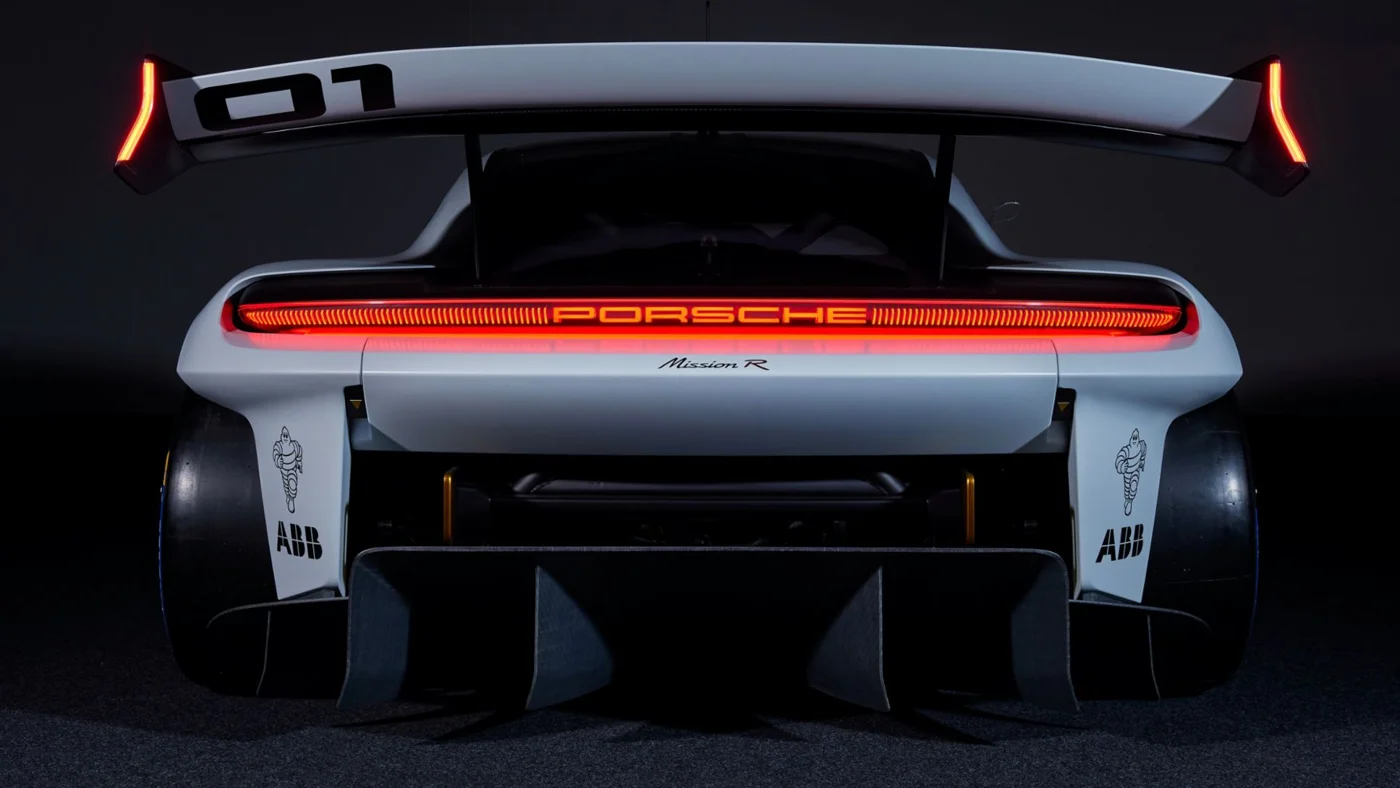
- Unveiled
- 2021 concept study
- Qualifying output
- More than 800 kW claimed
- Continuous race output
- 500 kW claimed
- Battery
- 82 kWh total in technical release
A concept worth revisiting, not a new launch
Porsche revealed Mission R in September 2021 as a vision of electric customer motorsport. The original announcement describes all-wheel drive, natural-fibre body components and a driver-focused cockpit. This article revisits that engineering idea; it does not present the concept as newly available or quote a Pakistan price.
A racing study is a way to explore competing demands. More power can increase heat, more battery can add mass, and faster charging can impose additional cooling requirements. Looking at those relationships makes the concept more useful than treating its most dramatic number as a buying specification.
Qualifying power and race power answer different questions
Porsche’s detailed drive release distinguishes more than 800 kW in qualifying configuration from 500 kW continuously in race mode. It describes direct oil cooling for the motor stators and battery, targeting repeatable performance rather than output that rapidly falls as temperatures rise.
A short qualifying effort and a race stint do not ask the same thing of a powertrain. The peak figure tells you about a particular operating condition. Continuous output tells you more about the intended sustained workload. Neither should be quoted without its context, and neither is an independent road-test result.
For road-car buyers, the transferable question is simple: what happens after repeated acceleration, hot-weather driving or consecutive charging stops? A concept does not answer that for a showroom EV, but it illustrates why thermal limits deserve attention alongside acceleration claims.
Battery size only makes sense with the intended session
The technical release specifies 82 kWh total battery energy and an intended 25–40-minute race duration. Total battery capacity is not automatically usable energy, and a racing-duration target cannot be converted into a normal-road range claim.
Track layout, pace and conditions affect consumption. A planned sprint format therefore shapes battery and cooling choices differently from a long-distance road journey. This is why comparing two cars solely by battery size can miss the purpose of each design.
For a production EV comparison, use the same published range test cycle and distinguish tested results from manufacturer targets. Mission R has no Pakistan ownership-cost or range result established here.
Charging claims need both endpoints and conditions
Porsche’s launch summary describes a 900-volt system and charging from 5% to 80% in approximately 15 minutes. The summary gives 340 kW, while the detailed drive release says up to 350 kW. Those official figures differ; we do not silently treat them as one verified measurement.
The time window is more informative than an isolated peak because a charging session does not stay at maximum power throughout. In practice, compatibility, battery temperature, state of charge and charger capability all matter. The concept claim is not a promise for an ordinary public charging stop.
The engineering takeaway is to ask about the complete charging session and the infrastructure required to repeat it. Comparing peak rates from unrelated vehicles, conditions or battery windows would not answer that question.
The cockpit links simulation and physical driving
Porsche’s interior release describes a modular driver cell that can also serve as a simulator, retaining the relationship between the seat, pedals, steering wheel and controls. The purpose is a more consistent interface between virtual preparation and the car.
That is a different type of performance work: helping the driver practise in a familiar environment. It does not mean a simulation proves real-world handling or removes the need for physical testing. Its value is in reducing changes in the interface while the driver learns.
Mission R remains most interesting as a connected set of choices—race duration, continuous power, cooling, charging and driver preparation. A single acceleration headline hides that work. The figures here remain Porsche’s concept claims, not our test measurements or confirmation of a production specification.
Primary sources
Specifications and performance figures above are manufacturer claims unless stated otherwise.
Porsche Mission R world premiere, 6 September 2021 ↗Porsche Mission R technical drive release ↗Porsche Mission R interior and simulator ↗