Mid-engined concept analysis · Published 4 October 2026 · 6 min
Genesis Magma GT: what its first dynamic run actually proves
Genesis has driven its mid-engined, twin-turbo V8 Magma GT in public. The hillclimb confirms a functioning concept; it does not yet confirm a production car or GT3 programme.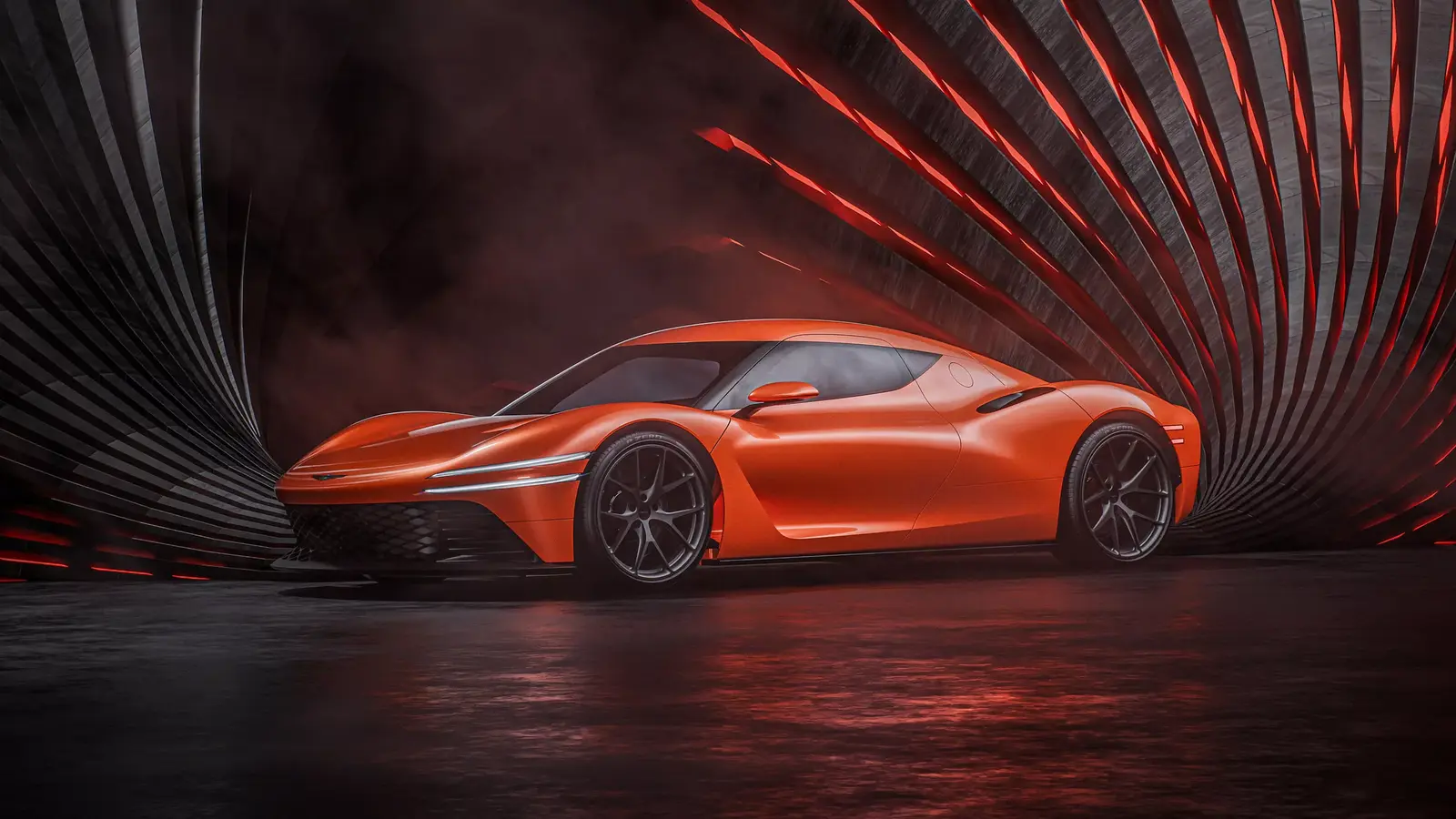
- Engine
- Twin-turbo V8
- Manufacturer output
- Up to 800 hp
- Layout
- Mid-rear engine
- Status
- Concept; not for sale
A dynamic debut proves movement, not production readiness
Genesis ran the Magma GT Concept at the Tutto Bene hillclimb on 14 September 2026. The manufacturer described the event as the concept's dynamic debut, giving the public its first evidence of the car operating on a real road rather than only appearing under show lighting. [1]
A demonstration run does not establish durability, homologation, lap time, kerb weight, price or a customer programme. Genesis's own consumer page still labels the vehicle a concept and says it is not for sale. The correct conclusion is that a working development car exists—not that production has been approved. [2]
The architecture is unusually specific for a design statement
Genesis describes a low body shaped around a mid-rear engine and identifies a twin-turbo V8 producing up to 800 horsepower. Front canards merge with the headlamps, while G-Matrix surfaces extend from the splitter as functional airflow elements. These remain manufacturer specifications and design claims. [2]
The mid-rear placement can support mass centralisation and the proportions of a dedicated sports car, but output alone cannot predict response. Final weight, gearbox, cooling, tyre specification, aerodynamic balance and control calibration would determine whether a production version behaves like a true long-distance grand tourer or a circuit-focused machine.
The road concept and GT3 study are not the same car
Genesis also revealed a separate Magma GT3 Concept in June. That study uses a widened track, larger splitter, cooling ducts, a fixed rear wing and diffuser to explore GT3 racing requirements. Genesis explicitly said its architecture, components and technical pathways had not been finalised. [3]
GT3 regulations begin with an eligible production model and a homologated racing package. Showing a race study therefore signals direction, but it does not prove that the road car has entered production or that the competition version has been accepted. Any timetable, price or entry list would need a later official announcement.
Aerodynamics must solve cooling as well as downforce
The road concept's canards, splitter treatment and rear surfaces are presented as functional, while the GT3 study adds ducts and a larger fixed aero package. A twin-turbo V8 used at high load must evacuate heat from the engine, charge-air system, brakes and cabin-adjacent structure without destabilising the car. [2,3]
That makes repeatability the next useful evidence. Future testing should show how the concept manages temperature across consecutive runs, how stable it remains as speed rises and whether the road car can preserve visibility and ride quality without losing the airflow required for performance.
What buyers and racing fans should wait for
For a road car, the missing facts include production approval, final power, torque, transmission, dimensions, mass, braking package, safety certification, market availability and price. For motorsport, homologation, a defined technical specification, test mileage and a confirmed competition programme remain outstanding.
The hillclimb is still meaningful: it shows Genesis investing in a dedicated sports-car form rather than applying Magma trim to an existing saloon or SUV. The next milestone is not another studio reveal. It is a dated production or racing commitment supported by specifications that can be independently compared.
Primary sources
Specifications and performance figures above are manufacturer claims unless stated otherwise.
[1] Genesis Newsroom — Magma GT dynamic debut, 14 September 2026 ↗[2] Genesis USA — Magma GT Concept product information ↗[3] Genesis Newsroom — Magma GT3 Concept study, 12 June 2026 ↗